

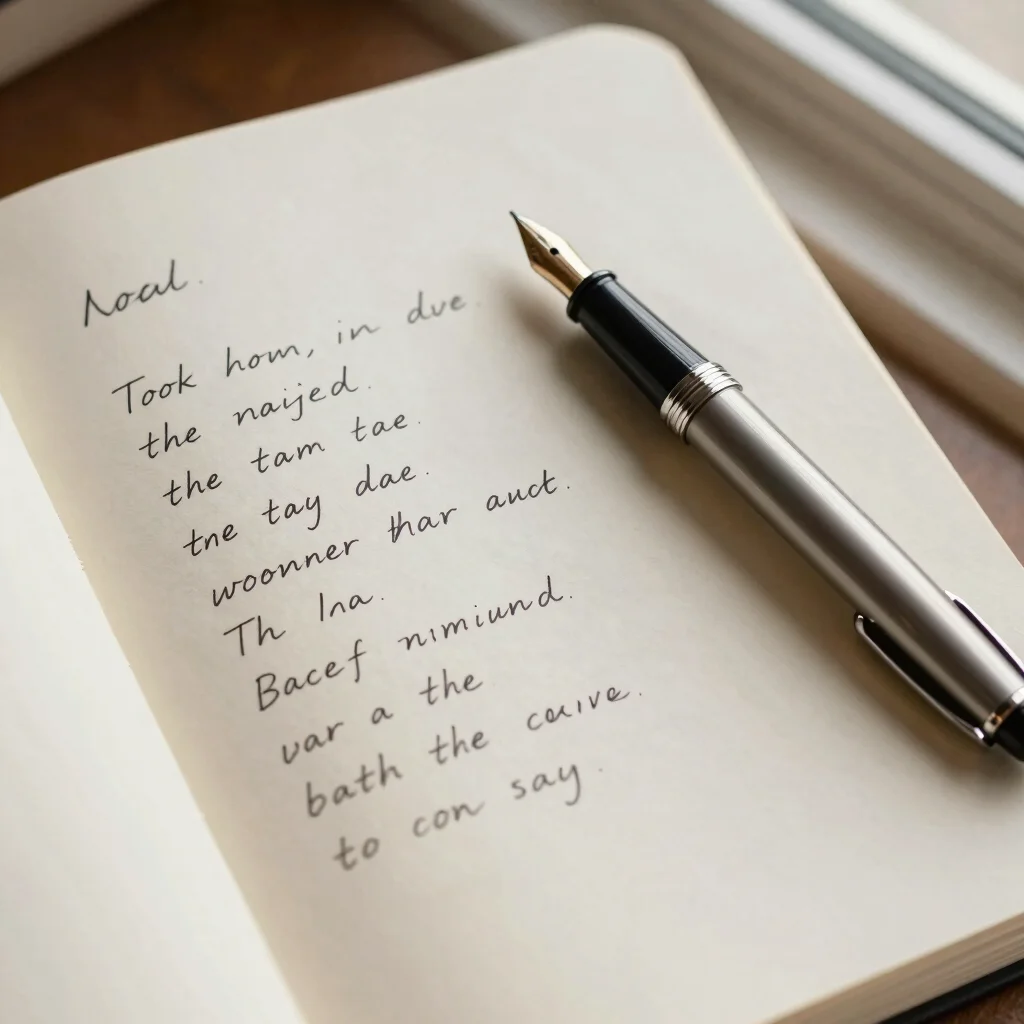
The kettle had begun its low whistle before Arthur noticed the envelope tucked between the pages of his father's marine log. Outside, the tide was retreating across the gray flats, leaving behind tide pools that caught the late afternoon sun like shards of broken mirror. He poured the water over tea leaves that smelled faintly of dried bergamot and woodsmoke, sitting down at the pine table where three generations of tide logs still rested.
The Sound of Salt Water on Wood
The letter was dated November 1974, written in blue ink that had softened into lavender over fifty winters. It detailed a single afternoon on the breakwater when the swell was so calm the gulls landed directly on the wet stones without spreading their wings. Arthur read the lines twice, noticing how his father recorded the light rather than the barometric pressure, choosing atmosphere over data.
In short fiction, the smallest domestic object often holds the weight of years spent saying nothing. A faded envelope or a stained porcelain cup becomes the anchor for everything a character could never voice aloud.
Memory as a Physical Artifact
Arthur folded the paper back along its original creases, feeling the fragile seam yield under his thumb. He set it beside the window where the salt air was already dampening the sill. Some truths do not require an explanation; they simply demand enough space in a quiet room to sit undisturbed.
